Guy Martin: Curiosity, Engineering & Getting Stuck In
Most people found Guy Martin through motorcycles. What's always fascinated me is his curiosity, and his habit of getting stuck in.
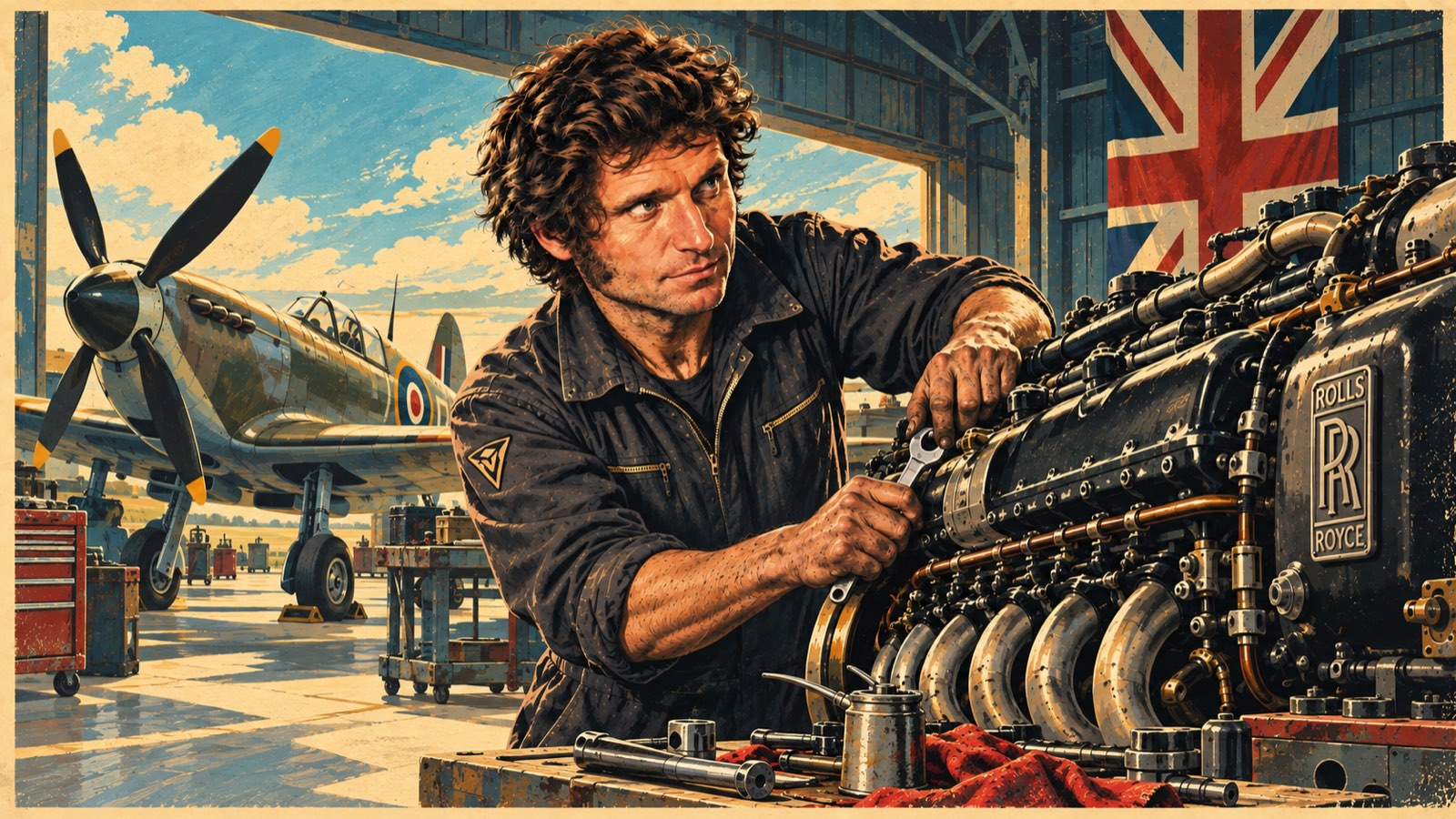
There are certain people who have influenced the way I look at engineering, tools and making things without me necessarily realising it at the time.
Guy Martin is definitely one of them.
Most people probably first came across Guy because of motorcycles. The sideburns, the tea, the Lincolnshire accent and a bloke seemingly quite happy to launch himself down public roads at completely unreasonable speeds.
But that's never really been the bit that's fascinated me most.
It's his curiosity.
He Wants to Know How It Works
What I've always liked about Guy is that simply seeing something working doesn't seem to be enough.
He wants to know why it works.
How was it built?
Who built it?
What happens if we take it apart?
Can we rebuild it?
Can we make it faster?
And, occasionally, what happens if we strap an enormous engine to it and see what it'll do?
That mentality resonates massively with me.
I've always had that urge to understand what's underneath the cover. Whether it's repairing equipment, playing with networking, building websites, designing systems or disappearing down a rabbit hole because I've suddenly decided I need to understand how something works, I enjoy the process of figuring things out almost as much as the finished result.
Sometimes more.
The Spanner Matters
One of the things I particularly admire about Guy is the respect he shows towards engineering and skilled trades.
The engineer isn't hidden behind the presenter.
The workshop isn't just scenery.
The tools aren't props.
There's an appreciation for the people who can actually make, repair, fabricate and maintain things.
I love that.
Working as a field service engineer has given me an even greater appreciation for that world. There's something incredibly satisfying about arriving somewhere with a machine that isn't working, opening the toolbox, diagnosing the problem and eventually watching it spring back into life.
It's problem solving with consequences.
Proper Engineering
Programmes like How Britain Worked were particularly brilliant for this.
Instead of treating Britain's industrial history as something sitting behind glass in a museum, Guy got involved.
Steam engines. Boats. Factories. Victorian machinery. Infrastructure.
Things were dismantled, repaired and rebuilt.
And inevitably, Guy ended up covered in something.
That's the sort of history I love.
Not just "this machine was built in 1890."
I want to know how the bloody thing works.
I want to see the bearings.
I want to know how they manufactured it without CNC machines, CAD, laser cutters and Amazon Prime delivering a replacement part tomorrow morning.
There's an enormous amount of knowledge buried inside old machinery, workshops and engineering practices.
Guy Martin has a brilliant way of bringing that knowledge back to life.
Speed Is Just Engineering With the Volume Turned Up
Then there are the speed projects.
Human-powered bikes, gravity racers, motorcycles, boats, aircraft and all sorts of increasingly questionable contraptions.
On the surface they're about records.
Underneath, they're engineering projects.
Aerodynamics. Gearing. Materials. Weight. Friction. Power. Cooling. Reliability.
Tiny improvements suddenly matter.
And I think that's another lesson I've taken from watching him over the years.
Details matter.
A job can technically be finished and still not be a good job.
- The cable routing can be cleaner.
- The tools can be organised better.
- The diagnosis can be more methodical.
- The documentation can be clearer.
- The website can be easier to use.
- The system can remove one more annoying step.
That pursuit of improvement has crept into practically everything I make.
Fix It Before You Replace It
There's also something refreshingly old-school about the idea that a broken thing isn't automatically a useless thing.
Find out what's wrong with it.
Repair it.
Fabricate something.
Modify it.
Learn from it.
That philosophy probably explains a fair amount about why I've ended up enjoying field service engineering as much as I do.
A faulty machine is effectively a puzzle.
You've got symptoms, information, tools and experience.
Then you've got to work backwards until you find the culprit.
And sometimes the fault you've spent ages chasing turns out to be one loose connector quietly laughing at you from behind a panel.
That's engineering.
The Workshop Mentality
There's a common thread running through many of the people who've influenced me.
Adam Savage gave me the confidence to embrace making and curiosity.
Nick Offerman reinforced the value of craft, patience and doing something properly.
John Malecki and his team have massively fuelled my appreciation for workmanship, workshops and, somewhat dangerously for my bank account, tools.
Guy Martin adds something else.
Engineering curiosity.
That desire to get your hands dirty and understand the machine rather than simply use it.
Together, those influences have shaped the way I approach my own projects.
Not Everything Needs to Become a Career
There's another part of Guy's attitude that I really like.
Curiosity doesn't need a business plan.
You don't have to monetise every hobby.
You don't need to become an expert before you're allowed to have a go.
Sometimes you can learn something simply because it's interesting.
That's something I'm trying to hold onto.
Networking. Web development. Engineering. Tools. Photography. Design. Ice hockey. Building systems for netball clubs. Random bits of technology I've decided I absolutely need to understand at 11pm.
They might look completely unrelated.
To me, they're all powered by the same thing:
"I wonder how that works?"
And once that question appears, I'm usually doomed.
Getting Stuck In
If I had to boil Guy Martin's influence on me down to one idea, it wouldn't actually be motorcycles or speed.
It would be getting stuck in.
Don't stand six feet away from the interesting thing.
Open the panel.
Pick up the spanner.
Ask the engineer.
Read the manual.
Make the prototype.
Break something occasionally.
Work out why it broke.
Then have another go.
Because every time you understand one more machine, system, tool or process, you add another little piece to the mental toolbox.
And you never quite know when you're going to need it.
That, more than anything, is why I've enjoyed watching Guy Martin over the years.
He makes engineering feel like what I think it should be.
Not a mysterious world reserved for people with the right qualifications or an immaculate workshop.
But an enormous collection of problems waiting for someone curious enough to say: