Where the Deer and the Antelope Play: Curiosity Doesn't Stop at the Workshop Door
Nick Offerman on nature, friendship and conservation, from someone who openly admits he is no authority. You don't need to know everything before you're allowed to care about something.
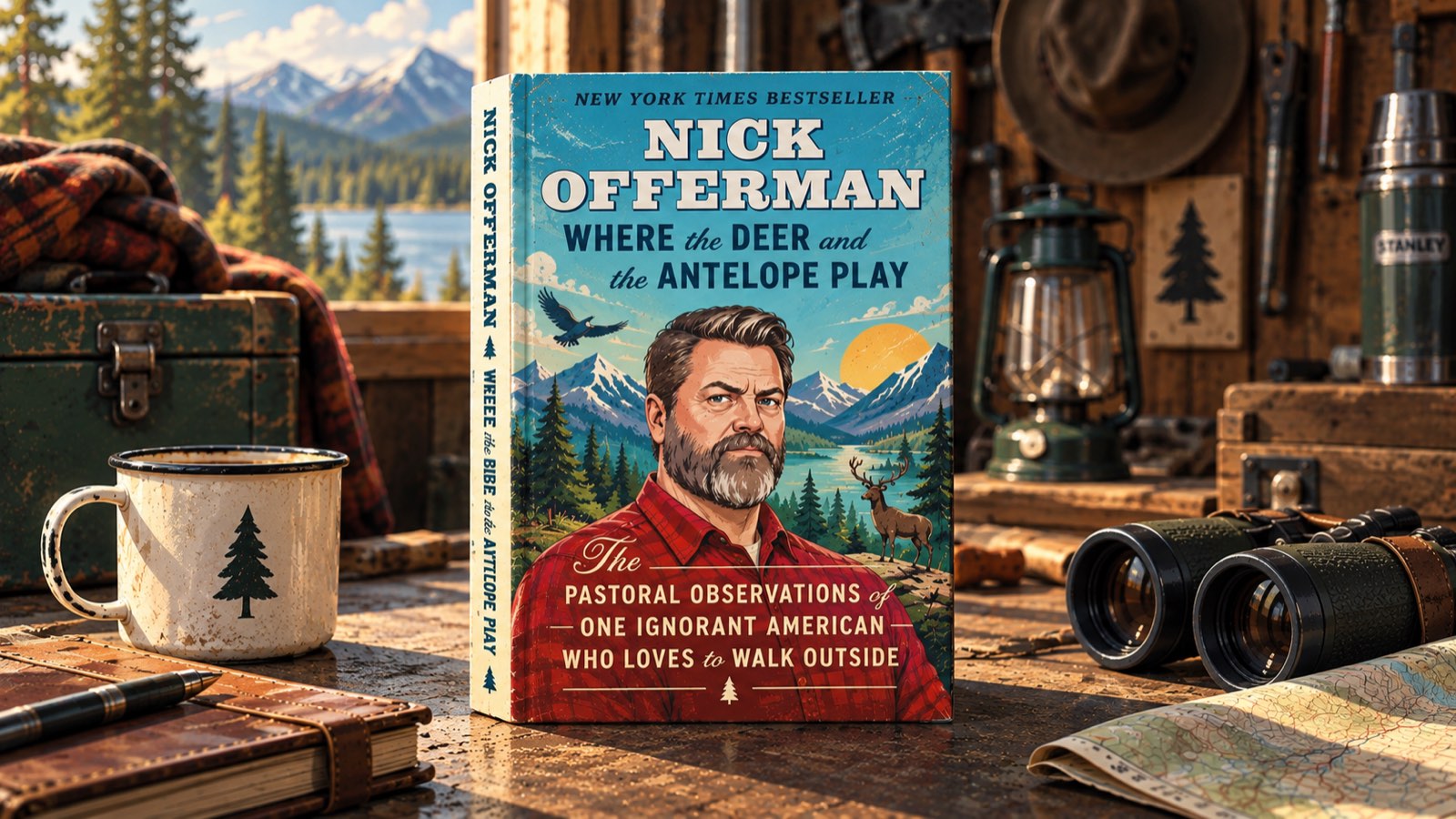
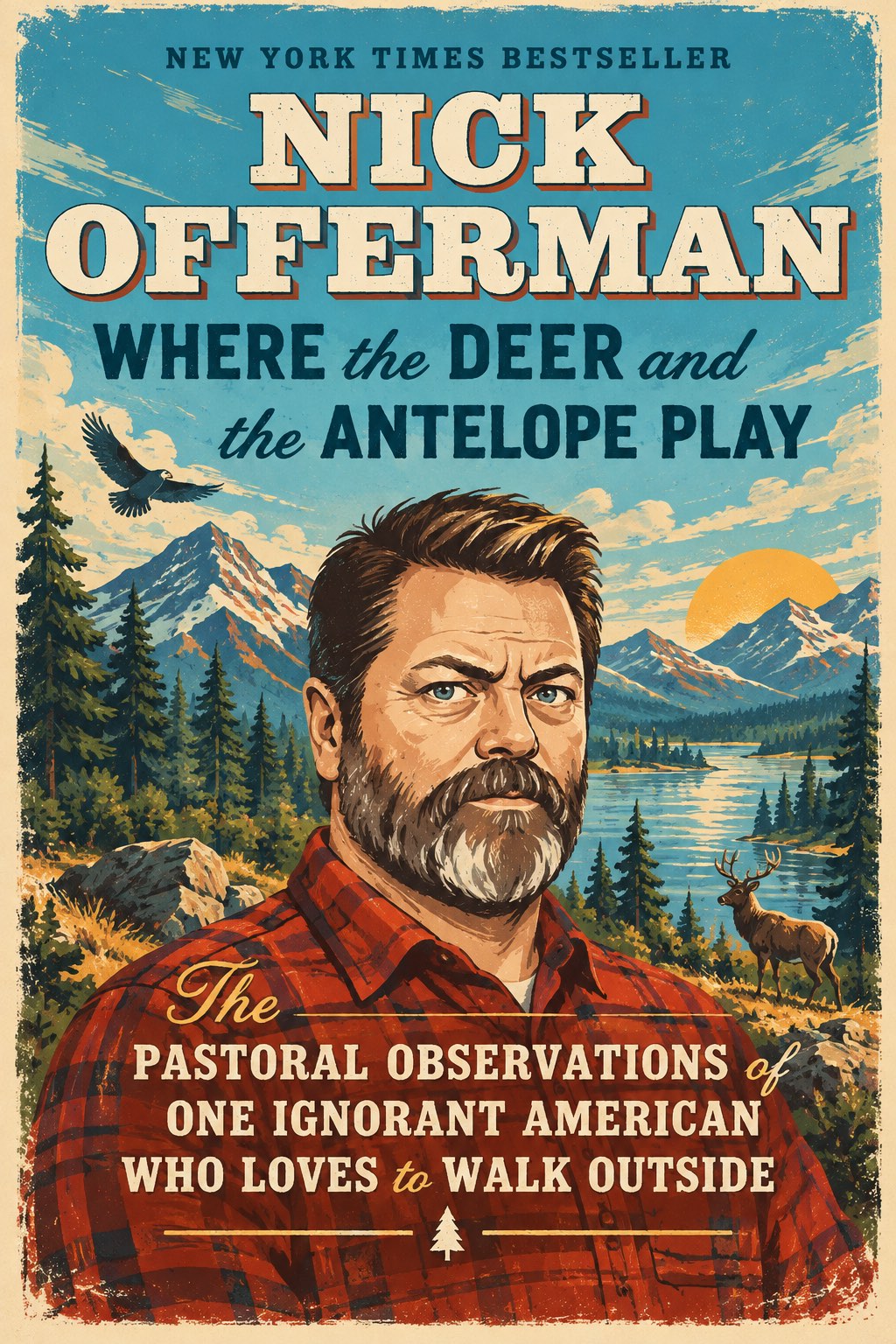
There is something wonderfully Nick Offerman about giving a book about nature, conservation, friendship and the American landscape the subtitle:
The Pastoral Observations of One Ignorant American Who Loves to Walk Outside.
It immediately tells you what kind of book this is going to be.
Nick isn't presenting himself as an environmental scientist, explorer or great authority on the natural world.
He's simply someone who likes being outside.
And perhaps that's precisely why Where the Deer and the Antelope Play works so well.
It's funny, thoughtful, occasionally uncomfortable and beautifully appreciative of the enormous world that exists beyond our doors.
More importantly, it asks a deceptively simple question:
When did we become so disconnected from it?
Just Go Outside
There is something refreshingly uncomplicated at the heart of this book.
Go outside.
Walk.
Look around.
Pay attention.
That sounds ridiculously simple, but modern life has become extraordinarily good at preventing us from doing exactly that.
We move from houses to cars to workplaces to shops and back again. There is always another screen demanding attention, another notification, another job that apparently needs doing immediately.
I'm as guilty of this as anyone.
I love technology. I love building things with it. I can happily disappear into a website, an app idea or some completely unnecessary technical rabbit hole for hours.
But eventually your brain needs something that doesn't require charging.
Where the Deer and the Antelope Play is a lovely reminder of that.
Sometimes you need to put everything down and go for a walk.
Curiosity Doesn't Stop at the Workshop Door
One of the things I've realised about my own curiosity is that it isn't particularly selective.
I love understanding how things work.
Machines.
Tools.
Networks.
Cameras.
Software.
Engines.
But the natural world might be the greatest piece of engineering we've ever had the privilege of trying to understand.
Forests regulate themselves.
Rivers carve landscapes.
Animals adapt.
Plants compete for light.
Entire ecosystems exist through millions of tiny relationships happening simultaneously.
There is no service manual.
No exploded diagram.
No QR code linking to the manufacturer's technical documentation.
Nature just gets on with it.
And once you actually start paying attention, there is an extraordinary amount to notice.
The Great Outdoors, Without the Heroics
Something I particularly enjoy about Offerman's approach is that this isn't the story of someone trying to conquer nature.
There is no obsession with being the toughest person on the mountain.
The landscape isn't an opponent.
That feels important.
Because there is a peculiar tendency to talk about the outdoors in terms of defeating it.
Conquering mountains.
Surviving wilderness.
Battling the elements.
But sometimes you can simply exist within it.
Walk through it.
Camp in it.
Paddle through it.
Sit somewhere and look at it.
Maybe eat something.
Perhaps have a laugh.
Then ideally leave it looking roughly the same as it did before you arrived.
That seems like a pretty good arrangement.
Friendship Makes the Adventure
The book isn't simply Offerman wandering alone through the wilderness contemplating trees.
Some of its best moments come from the people accompanying him.
His travels with friends, particularly writer George Saunders and musician Jeff Tweedy, turn the landscape into the setting for something equally important:
Conversation.
There is something about walking with another person that makes conversation different.
You aren't sitting opposite each other waiting for your turn to speak.
You're moving.
Looking at things.
Stopping.
Getting distracted.
The conversation wanders because you wander.
I like that.
Some of the best conversations I've ever had haven't happened because somebody announced that it was time to have a meaningful conversation.
They've happened while driving somewhere.
Walking somewhere.
Building something.
Fixing something.
Doing something else entirely.
The activity removes the pressure and the conversation finds its own route.
We Are Supposed to Maintain Things
There's another idea within the book that connects strongly with the way I look at things.
Maintenance matters.
Anyone working with machinery understands this immediately.
You can't continuously take from a system without eventually giving something back.
Ignore the strange noise.
Skip the inspection.
Don't clean it.
Don't lubricate it.
Don't replace the worn component.
Eventually the machine makes the decision for you.
The natural world obviously isn't a piece of fitness equipment, but the underlying principle feels strangely familiar.
Systems need looking after.
Land needs looking after.
Resources aren't infinite simply because they're enormous.
And perhaps one of humanity's less impressive talents is our ability to look at something unimaginably large and conclude that we couldn't possibly damage it.
History has repeatedly demonstrated otherwise.
Craftsmanship and Conservation Aren't That Far Apart
This is where Offerman's love of woodworking becomes particularly interesting.
If you work with wood, the material has a history before it reaches your bench.
It was a tree.
It grew somewhere.
Someone planted it, managed it or harvested it.
It took years, perhaps decades, to become the piece of timber sitting in front of you.
Suddenly waste feels different.
A beautifully made wooden object isn't merely a demonstration of craftsmanship.
It's also a demonstration of respect for the material.
Use it properly.
Understand it.
Don't waste it unnecessarily.
Make something worth making.
That's a philosophy that extends far beyond woodworking.
The Value of Not Knowing
The word I keep returning to in the subtitle is:
Ignorant.
It's funny, but it's also important.
There is freedom in admitting you don't know something.
I've spent much of my career arriving at things I don't completely understand.
That's essentially what troubleshooting is.
Something isn't behaving as expected.
Why?
You investigate.
Test.
Learn.
Ask questions.
Occasionally stare at it for several minutes hoping it becomes embarrassed and fixes itself.
Offerman approaches enormous subjects in this book while openly acknowledging that he isn't the ultimate authority on them.
He's learning.
Thinking.
Questioning.
Talking to people who know more than he does.
That's something I greatly respect.
You don't need to know everything before you're allowed to care about something.
Progress Isn't Always About Adding More
This book also made me think about our strange relationship with progress.
I'm fascinated by technology and engineering.
I love seeing what humans can build.
But technological progress doesn't automatically mean replacing everything that came before it.
Sometimes progress is understanding what was already working.
Sometimes the clever solution isn't another device.
Sometimes it's a tree.
A bicycle.
A vegetable garden.
A well-made object that lasts thirty years.
Or simply walking somewhere.
There is a lovely contradiction there.
I'm fascinated by the future, but increasingly interested in the things we shouldn't leave behind to reach it.
Get Your Boots Dirty
I think that's ultimately what I take from Where the Deer and the Antelope Play.
You don't need to become an outdoorsman.
You don't need expensive equipment.
You don't need to disappear into the wilderness for six months and emerge with a beard capable of housing several woodland creatures.
You just need to occasionally go outside and pay attention.
Walk somewhere you've never walked.
Look at the landscape.
Notice the buildings.
Notice the trees.
Watch the weather coming in.
Take a camera.
Leave the camera at home.
Talk to someone.
Sit somewhere.
Get slightly muddy.
Be curious about the enormous machine quietly operating around us.
Why It Belongs on My Shelf
Alongside Paddle Your Own Canoe and Gumption, this book feels like another piece of Nick Offerman's broader philosophy.
Paddle Your Own Canoe asks what makes a satisfying life.
Gumption looks towards people with the courage and curiosity to actually do something.
And Where the Deer and the Antelope Play turns the attention outward.
Towards the landscape.
Towards our relationship with nature.
Towards friendship, responsibility and the simple pleasure of walking through somewhere beautiful.
Together, they circle around many of the ideas that increasingly matter to me:
Curiosity. Craftsmanship. Independence. Friendship. Responsibility. Humour. Making things. Looking after things. And occasionally remembering to switch everything off and go outside.
I spend a lot of my life interested in what humans have built.
Machines. Tools. Cars. Cameras. Computers. Networks. Buildings.
This book is a lovely reminder to occasionally look beyond all of that at something we didn't build.
And perhaps resist the urge to improve it.
Sometimes the best thing you can do is pull on your boots, leave the tools behind and wander off for a while.
The workshop will still be there when you get back.
PART OF THIS STORY
- The Greatest Love Story Ever Told: Finding Your Person Without Losing YourselfThoughts · 19.09.26
- Paddle Your Own Canoe: Building a Life That Is Actually YoursThoughts · 19.09.26
- Gumption: Curiosity, Craft and the People Who Actually Do ThingsThoughts · 19.09.26
- Nick Offerman: Making Things, Doing Things Properly, and the Value of Knowing HowThoughts · 16.09.26