The Greatest Love Story Ever Told: Finding Your Person Without Losing Yourself
Nick Offerman and Megan Mullally's oral history is funny, candid and occasionally ridiculous. Underneath the jokes, it's a book about finding your person without losing yourself.
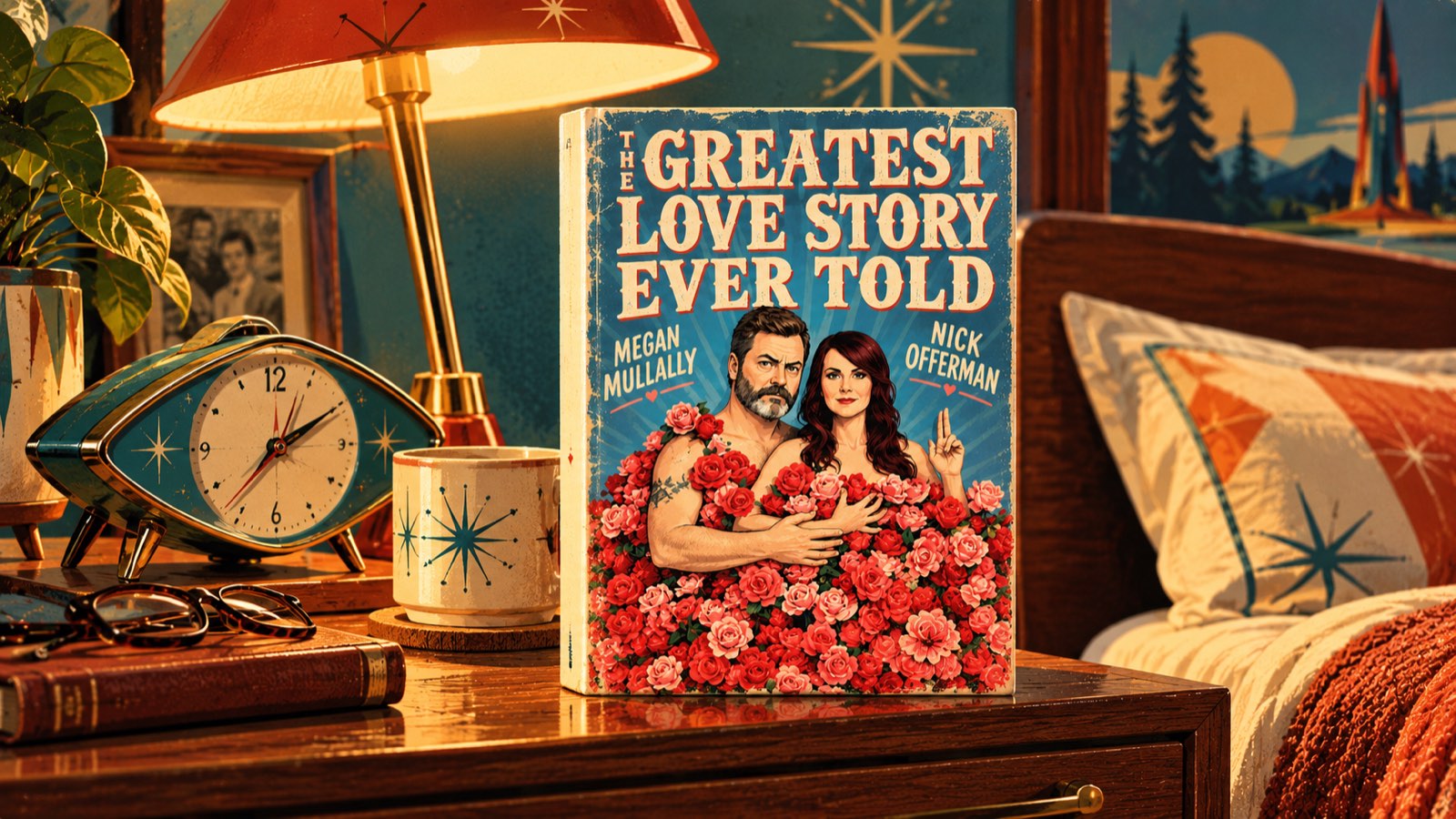
Some books are carefully structured memoirs. Some are biographies. Some are collections of lessons accumulated over a lifetime.
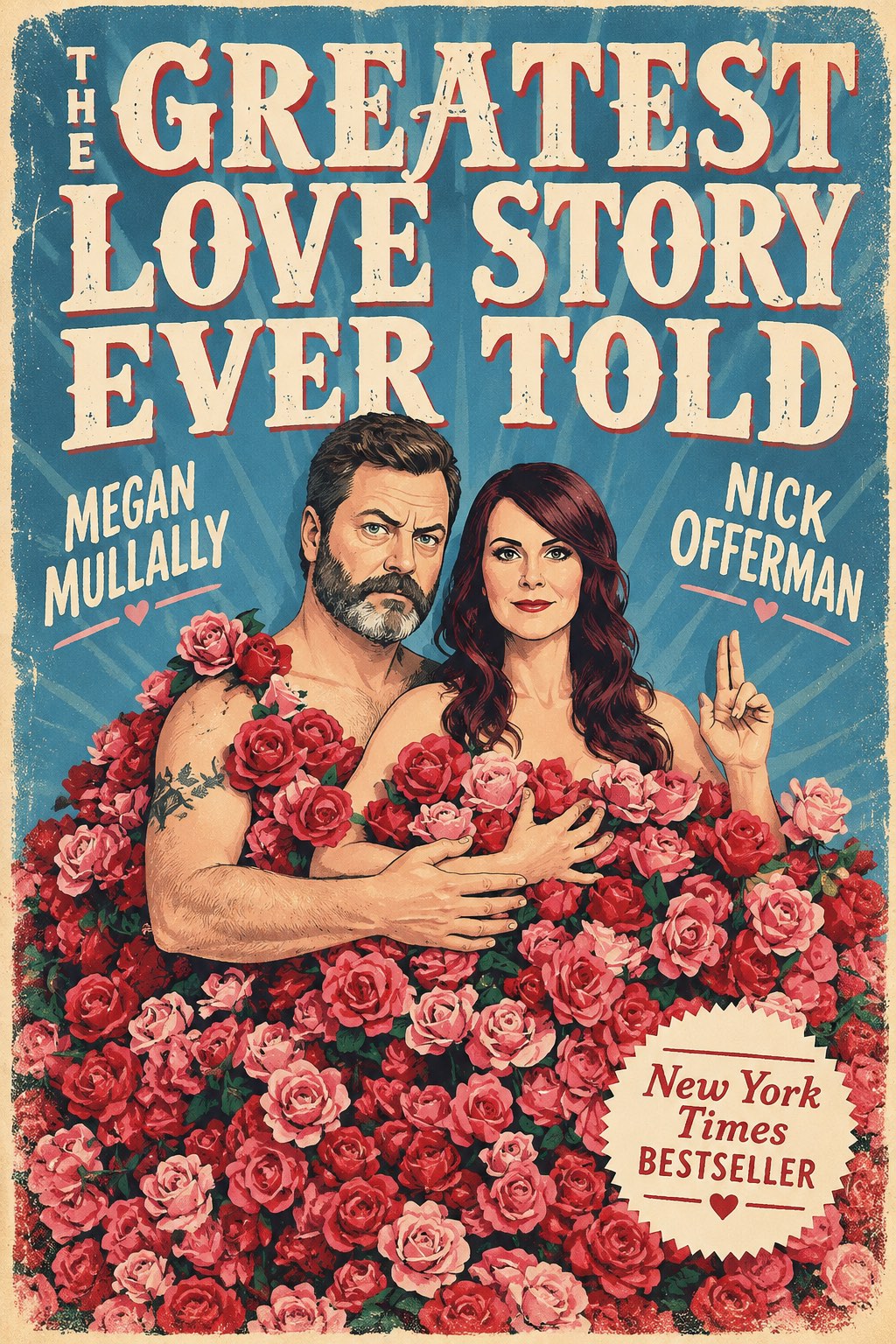
And then there's Nick Offerman and Megan Mullally's The Greatest Love Story Ever Told: An Oral History, which feels more like being invited into a conversation between two people who genuinely enjoy being together, and then discovering that neither of them has any intention of behaving normally for the duration.
It's funny, candid, strange, affectionate and occasionally completely ridiculous.
But beneath all the jokes is something surprisingly meaningful.
It's a book about finding your person without losing yourself.
And I think that's what makes it much more interesting than simply being a celebrity love story.
Two Very Different People
One of the things I love about the book is that Nick and Megan aren't presented as two halves who somehow became one perfectly matched unit.
They're two individuals.
They have different personalities, interests, habits and ways of looking at the world.
And that's important.
Because there's a slightly strange romantic idea that finding the right person means gradually merging into some sort of single domestic organism.
This book suggests something much healthier.
You can love someone enormously while still being completely yourself.
You can have your own interests.
Your own projects.
Your own friends.
Your own ridiculous obsessions.
A Conversation Rather Than a Memoir
The format is one of the things that makes the book work so well.
It's an oral history, essentially a long conversation.
Nick tells a story.
Megan interrupts.
Nick corrects something.
Megan remembers it differently.
They wander somewhere completely unrelated.
Eventually they somehow find their way back.
It feels wonderfully human.
Because that's how shared memories actually work.
Two people can experience exactly the same moment and remember completely different details.
One remembers the restaurant.
The other remembers the argument on the way there.
One remembers what somebody said.
The other remembers the completely inappropriate shirt they were wearing while saying it.
Together, those memories build something richer than either version on its own.
Love Isn't the Absence of Annoyance
One of the refreshing things about Nick and Megan's relationship is that neither seems interested in pretending relationships are permanently romantic.
People are irritating.
Even people you adore.
Possibly especially people you adore, because they're the ones who spend enough time around you to discover exactly which tiny behaviour will eventually drive you insane.
And that's normal.
The book doesn't present love as perpetual candlelight and meaningful eye contact.
It presents something much more recognisable.
Laughing together.
Supporting each other's careers.
Finding each other attractive.
Getting irritated.
Having private jokes.
Travelling.
Eating.
Arguing.
Making things.
Spending time apart.
Coming home.
And continuing to choose each other through all of it.
That's a much more interesting version of romance.
Make Each Other Laugh
Humour sits at the centre of their relationship.
That shouldn't be surprising considering who they are, but there's something deeper happening underneath the jokes.
Making somebody laugh requires knowing them.
You gradually learn their rhythm.
What they find ridiculous.
What they'll tolerate.
Which joke you've pushed slightly too far.
Which stupid reference will make absolutely no sense to anybody else in the room but will immediately destroy the person sitting next to you.
Those little private languages become part of a relationship.
And reading Nick and Megan bouncing off each other throughout the book gives you the feeling that laughter isn't simply something they happen to enjoy.
It's part of the architecture holding everything together.
Finding Your Person Later Than Expected
There's another part of their story I particularly like.
Neither of them was a teenager discovering love for the first time.
They'd already lived.
They had careers.
Experiences.
Failures.
Relationships.
Opinions.
Habits.
They knew considerably more about who they were.
And then they met.
There's something reassuring about that.
Life doesn't operate according to a beautifully organised schedule.
There isn't a universal age by which you're supposed to have discovered your career, bought the correct house, found the correct person and assembled the approved version of adulthood.
Sometimes life takes a completely different route.
The important thing is recognising something good when you eventually encounter it.
Supporting Someone Without Becoming Them
This might be one of my favourite ideas running through their relationship.
They support one another's interests without pretending they need to share every one of them.
That matters.
If somebody you love becomes excited about something you don't particularly understand, you don't necessarily need to become interested in the thing itself.
Sometimes you're interested because they're interested.
You listen.
You ask questions.
You encourage them.
You celebrate when it works.
You tolerate the increasingly large collection of equipment required for whatever the latest hobby happens to be.
That last one may be particularly important in my case.
Because love isn't necessarily saying:
"I also desperately want to hear about this new tool."
Sometimes it's:
"I have absolutely no idea why you need another screwdriver, but I can see that this has made you inexplicably happy."
Close enough.
Love and Craftsmanship
There's something else here that connects surprisingly well with Offerman's other books.
Craftsmanship.
Not in the woodworking sense this time.
In the relationship sense.
Good relationships are made.
Not purchased.
Not discovered fully assembled.
Not magically maintained by compatibility.
Made.
Through attention.
Time.
Communication.
Compromise.
Humour.
Respect.
Patience.
And occasionally knowing when to leave somebody alone for an hour.
There's a lovely parallel with making anything worthwhile.
You can't rush it.
You have to maintain it.
Sometimes you get something wrong.
Sometimes you need to repair something.
And the tiny things that nobody else notices are often the things that matter most.
Still Being Individuals
Perhaps the most important thing I took from the book is that their relationship doesn't seem to have swallowed either person's identity.
Nick is still Nick.
Megan is still Megan.
Their relationship becomes something additional.
Not something that replaces them.
I think that's a genuinely lovely idea.
The healthiest partnerships aren't two incomplete people desperately trying to create one functioning human.
They're two complete people deciding:
I'd quite like to do this life thing with you.
And then figuring out what that means together.
The Ordinary Stuff Is the Good Stuff
For all the stories about Hollywood, acting and celebrity, the parts of the book that resonate most aren't really about any of that.
They're about companionship.
Meals.
Conversations.
Trips.
Animals.
Hobbies.
Sex.
Arguments.
Family.
Work.
Sitting around doing very little.
The ordinary ingredients of a shared life.
Because ultimately, most relationships aren't made from enormous cinematic moments.
They're made from thousands of tiny ones.
The cup of tea.
The stupid joke.
The message asking whether you need anything from the shop.
The conversation in the car.
The person who listens when you've had a terrible day.
The person who knows exactly when something is bothering you despite you insisting that everything is perfectly fine.
That's the actual stuff.
Why It Belongs on My Shelf
I've now written about several Nick Offerman books, and what I find interesting is how each one approaches life from a slightly different direction.
Paddle Your Own Canoe is about building a life that feels authentically yours.
Gumption explores people with the courage and curiosity to do something with theirs.
Where the Deer and the Antelope Play looks outward at nature, friendship and our responsibility to the world around us.
And The Greatest Love Story Ever Told looks at who you might choose to share all of that with.
Not with some grand formula for the perfect relationship.
Quite the opposite.
Nick and Megan's story is weird, imperfect, funny and unmistakably theirs.
And maybe that's the point.
A good life isn't about following somebody else's instructions.
Neither is a good relationship.
Find someone who lets you be yourself.
Give them the same freedom in return.
Support their strange interests.
Make each other laugh.
Build something together.
Look after it.
And never underestimate the romantic importance of occasionally leaving each other alone to get on with a project.
That sounds like a pretty delicious way to live.
PART OF THIS STORY
- Where the Deer and the Antelope Play: Curiosity Doesn't Stop at the Workshop DoorThoughts · 19.09.26
- Paddle Your Own Canoe: Building a Life That Is Actually YoursThoughts · 19.09.26
- Gumption: Curiosity, Craft and the People Who Actually Do ThingsThoughts · 19.09.26
- Nick Offerman: Making Things, Doing Things Properly, and the Value of Knowing HowThoughts · 16.09.26