Tool Care: Looking After the Tools That Look After Me
Clean, inspect, lubricate, put away. A five-minute habit for tools that spend their lives on plant-room floors.
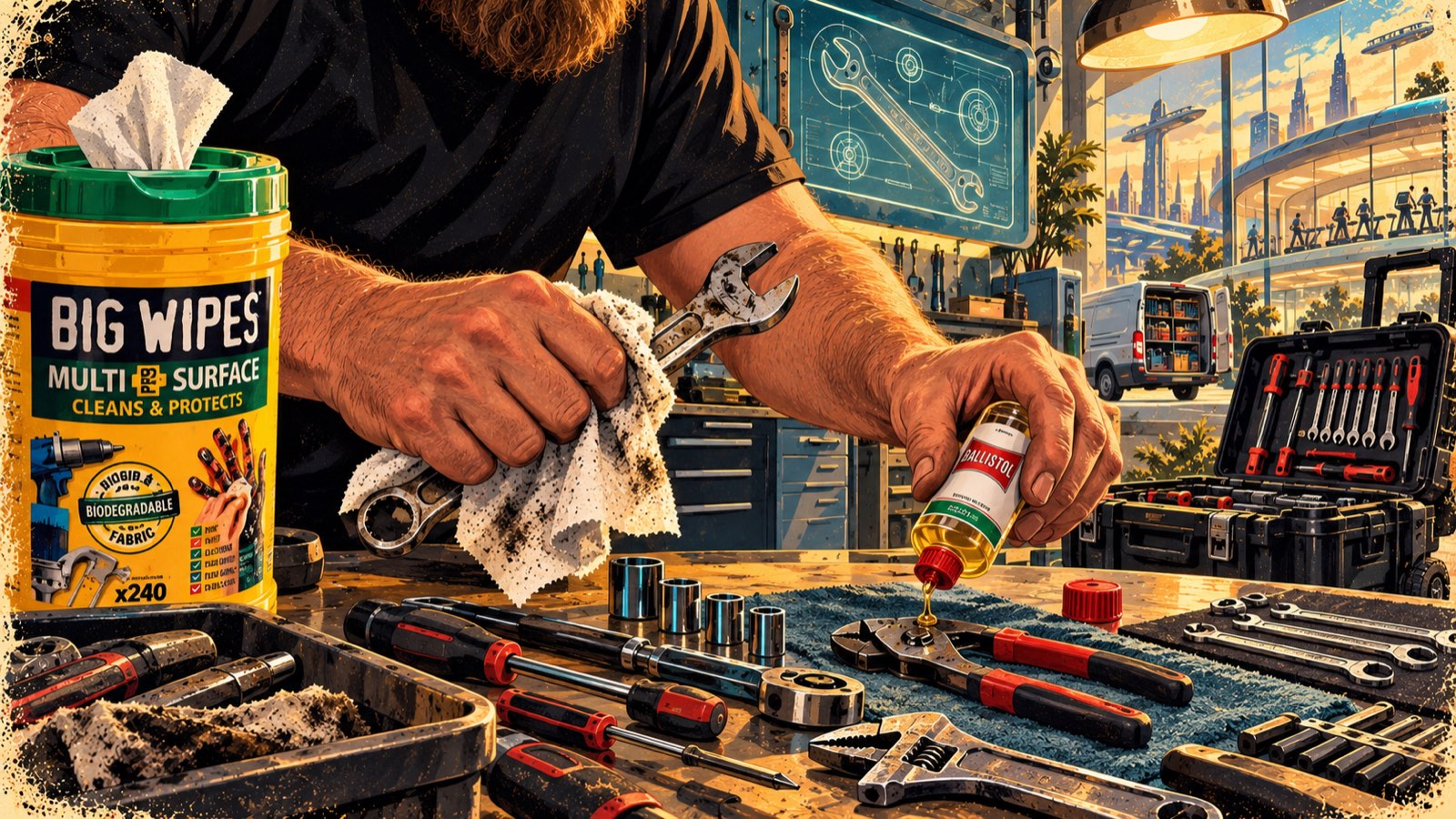
There is something satisfying about opening a tool bag and seeing tools that are clean, organised and ready for work.
My tools aren't display pieces. They spend their lives in a field-service environment, being carried into gyms, dropped onto plant-room floors, exposed to dust and grime, handled with dirty hands and used around equipment that can be covered in everything from belt dust to old grease.
That is exactly why I think looking after them matters.
A decent tool can last for years, sometimes decades, but only if you return the favour.
My Simple Tool-Care Routine
I don't have an elaborate workshop ritual involving seventeen different bottles and a ceremonial polishing cloth. My routine is deliberately simple:
It takes very little time, and I think that's the secret. If maintaining your tools becomes a massive job, you're less likely to actually do it.
The video How to clean and maintain hand tools is a good example of the general principle. Tools are working equipment, but a little routine maintenance can make a big difference to how they feel and perform.
Step One: Get the Grime Off
My first step is usually Big Wipes Heavy-Duty Wipes.
I use them to remove the everyday dirt and grime that tools accumulate while I'm working. Handles, shafts, jaws and other external surfaces get wiped down before anything else happens.
They're particularly useful for field work because I don't need a sink, bucket or cleaning station. The tub can live with my equipment and the wipes are ready when I need them.
The Heavy-Duty wipes have a dual-sided design, with a more abrasive side intended to tackle things such as grime, oil and dirt and a smoother side for lifting away residue. That makes them particularly handy for the sort of quick tool clean-up I want to do at the end of a job or day.
It also means I'm not putting filthy tools straight back into the bag.
That's something I think is easily overlooked. Put one dirty tool back and you're also transferring that muck onto the storage, other tools and eventually your hands.
Step Two: Have a Look at the Tool
Cleaning also gives me an opportunity to actually inspect what I'm using.
Once the dirt is gone, it's much easier to notice things that weren't obvious beforehand: damaged handles, corrosion beginning to appear, worn edges, loose components or mechanisms that aren't moving as freely as they should.
For a field engineer, that's important.
I'd much rather discover something isn't right while I'm maintaining my tools than discover it when I'm kneeling beside a machine miles from home and actually need it.
It's the tool equivalent of preventative maintenance.
Step Three: Put Something Back
Cleaning is only half of my routine.
After removing the grime, I use Ballistol Universal Oil to re-lubricate appropriate tools and help protect them for the future.
For metal tools in particular, Ballistol says its Universal Oil leaves a protective alkaline film, helps protect against corrosion and, because of its low surface tension, can work its way into small gaps and fissures. The company specifically lists its use for the upkeep of tools and precision instruments.
I don't want tools swimming in oil. It's about using an appropriate amount where it's actually required.
Moving joints, pivots and suitable exposed metal components can receive a little attention before the tool goes back into storage.
The result I'm looking for is simple: clean, protected and moving properly.
Why Bother?
Because good tools aren't cheap.
I've gradually built up a collection of tools that I enjoy using, and once I've found something that works well, I want to keep it working well.
There's also a difference in feel.
A quality pair of pliers with a clean, smoothly moving joint is nicer to use than one that has spent six months accumulating dirt at the bottom of a tool bag. Ratchets, cutters, adjustable tools and anything with moving components all benefit from being treated as equipment rather than consumables.
And there's a professional element to it too.
If I arrive on site to maintain somebody else's equipment while my own equipment looks neglected, there's a slight contradiction there.
Tools Are an Investment
I've increasingly started looking at my tool bag as a system rather than simply a collection of things I've bought.
Every tool has a job.
I choose tools because they make that job easier, safer or more reliable. Some aren't cheap, but the calculation changes when you expect to own them for many years.
A £5 tool you replace repeatedly isn't necessarily better value than a £30 tool that you enjoy using and look after for a decade.
That makes maintenance part of the purchase.
It doesn't need to become obsessive either. These are tools. They're supposed to acquire scratches, marks and signs that they've actually done some work.
There's a big difference between a tool looking used and a tool looking neglected.
I like mine to look used.
The Five-Minute Habit
That's really what my approach to tool care comes down to.
- Get the worst of the dirt off with Big Wipes.
- Check the tool while it's clean.
- Apply Ballistol Universal Oil where appropriate to lubricate and protect suitable components.
- Wipe away any unnecessary excess.
- Put everything back where it belongs.
Five minutes here and there is far easier than trying to rescue a neglected tool several years down the line.
I spend my working life maintaining and repairing equipment so that somebody can get the longest possible useful life from it.
It makes sense to give the equipment that allows me to do that job exactly the same treatment.
WHERE TO GET THEM