Checkout Manager
Tesco, September 2008 to November 2010. A rota, a radio, and my first real lesson in what managing people actually means.
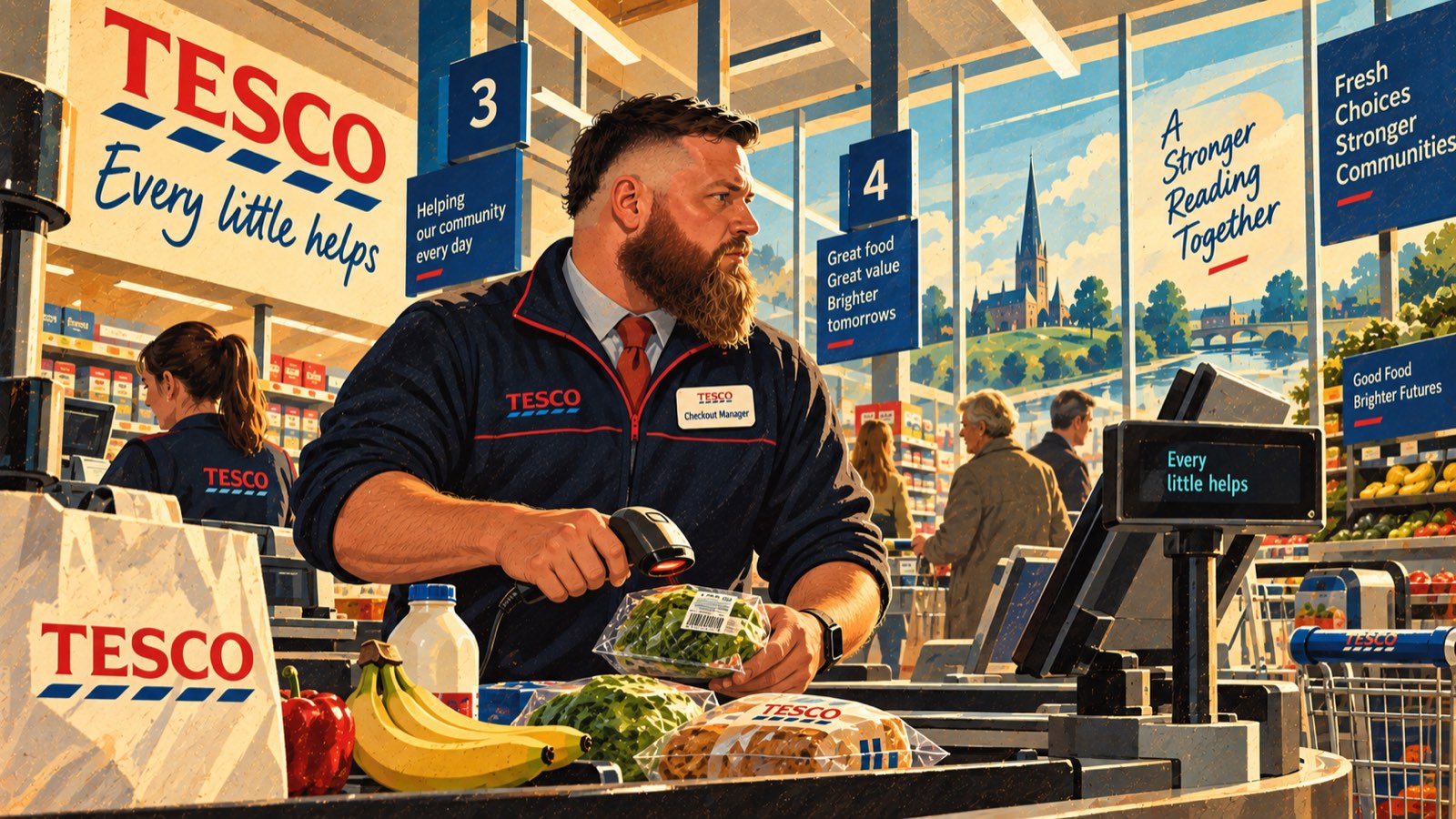
Tesco
September 2008 – November 2010 · Reading, England
Tesco was one of my earliest management roles and, looking back, probably one of the first places I learned what managing people actually meant.
As a Checkout Manager, I was responsible for keeping one of the busiest parts of the store moving. That meant customers, colleagues, rotas, queues, problems and the occasional situation that absolutely wasn't covered by the training manual.
Keeping the Front End Moving
A supermarket checkout operation can change remarkably quickly.
One minute everything is running smoothly. The next, queues are growing, somebody hasn't turned up for their shift, a till has developed a problem and three customers need assistance at once.
I planned staff coverage, adjusted workloads and delegated responsibilities based on people's individual strengths, moving colleagues around when demand changed.
It taught me to look at the bigger picture rather than becoming buried in one problem.
Learning to Manage People
This was also where I began developing my own approach to leadership.
Different people respond to situations differently. Some colleagues were naturally confident dealing with customers, while others needed support when conversations became difficult.
Part of my job was helping the team handle those situations calmly and professionally.
I learned that managing people isn't simply about telling them what to do. It's about giving them the confidence and support to do it well.
Customer Service at Scale
Working on checkouts meant being constantly visible to customers.
I dealt with enquiries, complaints and problems that couldn't be resolved at the till, often needing to investigate what had happened before finding the right solution.
It gave me an early appreciation for how small problems in a process can create disproportionately frustrating experiences for customers.
That idea would crop up repeatedly throughout my career.
Where Leadership Started
I spent just over two years at Tesco, but it gave me my first substantial experience of coordinating a team, managing workloads and making decisions while everything around me was still moving.
There were no futuristic dashboards, clever apps or automated workflows.
Sometimes it was a rota, a radio and figuring out where you needed people before the queues appeared.
But the principle I've carried forward is much the same: